What to Wear to a Nursing Interview (2026): The Scrubs Question, Answered + Checklists
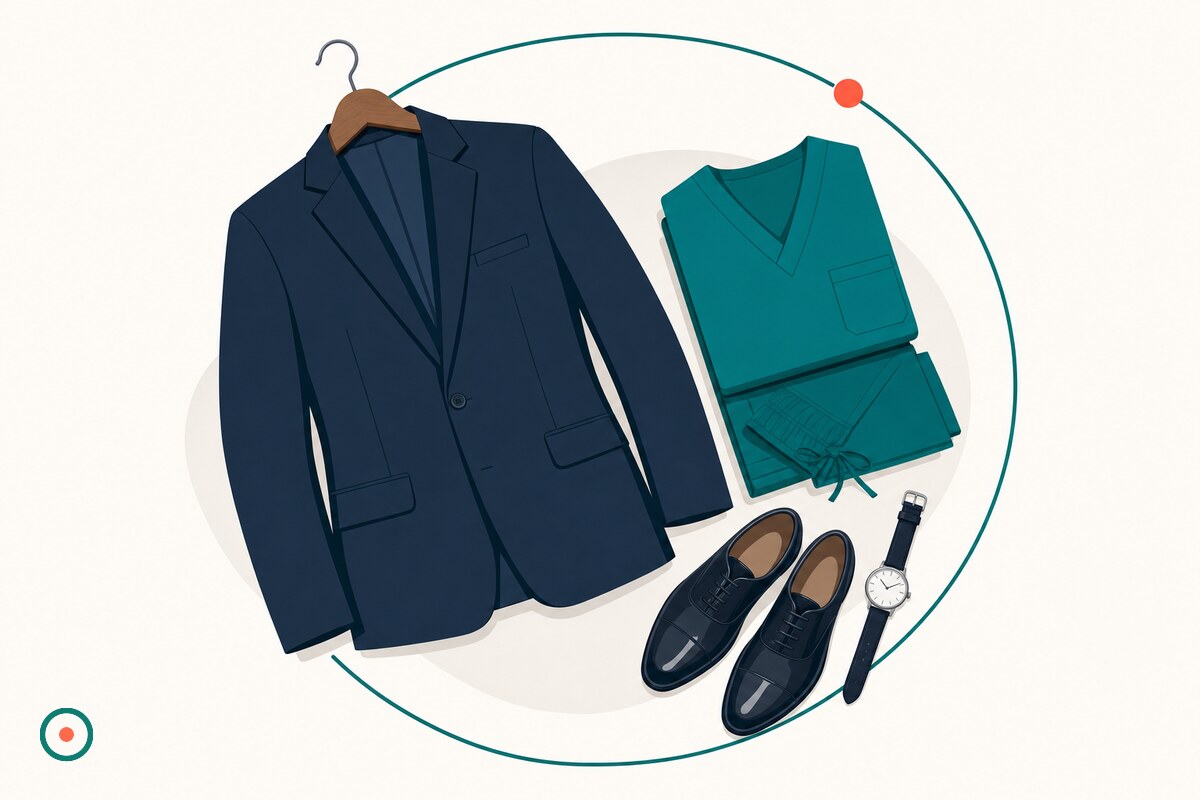
Short answer: dress business casual (a step toward business professional), and do not wear scrubs — unless HR specifically tells you you’ll shadow on the unit afterward. Aim for neutral colors, modest cuts, and clean, polished shoes. Your outfit’s job is to get you to neutral so the panel focuses on your answers, not your clothes.
Here’s exactly what that looks like, for women and men, plus the nuances most new grads miss.
The scrubs question (the one everyone asks)
Don’t wear scrubs to a standard interview — even for a bedside role. It reads as under-dressed for the occasion. The one exception: if the hospital tells you you’ll do a working interview or shadow shift right after, bring or wear clean scrubs as instructed (or change into them). When in doubt, ask the recruiter — and default to business casual.
What to wear — women
- Top: a tailored blouse, modest shell, or crisp button-down — add a blazer or structured cardigan to layer.
- Bottoms: well-fitted dress slacks or a knee-length A-line skirt. (A knee-length sheath dress works too.)
- Shoes: closed-toe flats, loafers, or low/block heels. Skip stilettos and open-toe sandals.
- Colors: neutrals — navy, gray, black, soft blue.
What to wear — men
- Top: a pressed long-sleeve button-down (a neat polo at the most casual).
- Bottoms: chinos or dress pants — never jeans.
- Layer: a blazer, sport coat, or smart sweater over the collar. A tie is optional for business casual but a safe bet at traditional hospitals.
- Shoes: clean, polished dress shoes or loafers with dark socks.
Grooming & the details that quietly matter
- Jewelry: minimal — studs and a simple watch.
- Tattoos & piercings: cover visible tattoos and remove facial piercings until you know the unit’s policy.
- Scent: wear none. No perfume or cologne — patients and interviewers often have sensitivities, and many facilities are scent-free.
- Hair & nails: neat, off the face; short clean nails (you’re about to be at the bedside).
What to bring
A simple folder with a few printed résumés, your license/certifications, a pen, and a written list of questions to ask the interviewer. It signals “prepared,” and referencing notes looks organized, not unprepared.
Quick answers to what new grads also ask
- Can I wear jeans? No — not even dark ones.
- What color is “safest”? Neutrals (navy, gray, black) read professional and let you, not the outfit, stand out. Avoid loud patterns and bright bold colors.
- Virtual/phone interview? Dress the same on top, test your camera and lighting, plain background.
- Manager/leadership role? Lean full business professional (a suit).
- The 3 C’s of interviewing people ask about: Confidence, Competence, Communication — your outfit supports the first, your prep delivers the other two.
The truth about the outfit
A great outfit can’t win the interview — but a sloppy one can cost you before you speak. Get the clothes to “polished and forgettable,” then put your energy where the offer is actually decided: your answers.
That’s the part worth practicing. Once your outfit’s sorted, run through the questions that actually decide it — start with “tell me about yourself”, the full new-grad question list, and the one-page nursing interview cheat sheet. And if you want to walk in genuinely calm, practice them out loud in a mock panel with Roundly — built with real nurse recruiters and hiring managers.
You've read the answers. Now say one out loud.
Reading a sample answer and delivering it to a panel that's deciding whether to hire you are two different skills. Roundly runs a mock nurse panel that asks these exact questions, listens to your answer, and scores your clinical reasoning and structure — not just how confident you sounded.
Start a mock nurse panelTakes about two minutes to set up. Finish 15 panels without an offer and we refund you.