Dialysis Nurse Interview Questions (2026): Access, Intradialytic Hypotension & Behavioral — With Sample Answers
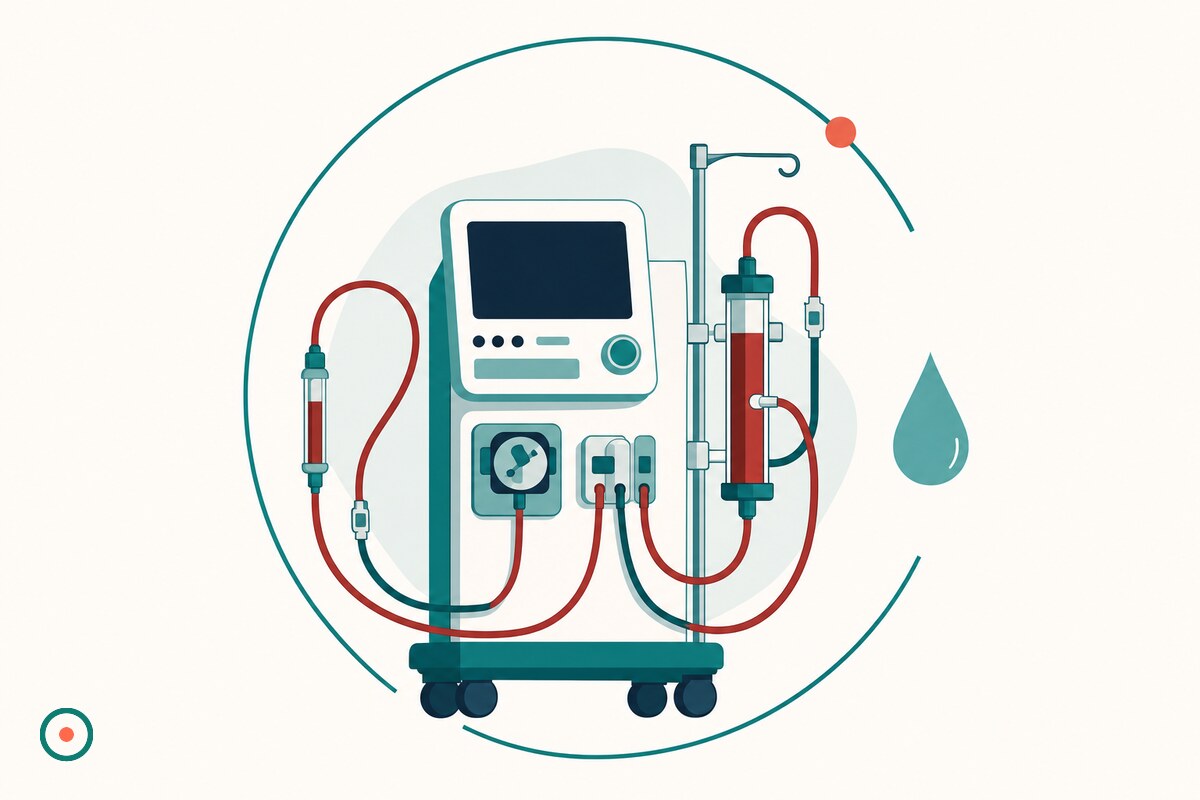
Dialysis (outpatient or acute) is a real first-job route for new grads — chains like DaVita and Fresenius hire and train them — and the interview tests one core thing: can you run a safe treatment, catch a patient crashing on the machine, and protect their access? Expect clinical scenarios around hemodialysis, dropping blood pressures, and vascular access, plus behavioral questions and “why dialysis.”
Here are the questions dialysis panels actually ask, each with a sample answer to adapt. New grad? Lean on your fundamentals — fluid, electrolytes, infection control — and show safe judgment.
Frameworks that carry your answers
- SBAR (Situation → Background → Assessment → Recommendation) for clinical scenarios and escalation.
- STAR (Situation → Task → Action → Result) for behavioral “tell me about a time…” questions.
Clinical scenario questions
”A patient’s blood pressure drops during treatment. What do you do?”
“Intradialytic hypotension — I act fast. I’d lower or stop ultrafiltration, put the patient in Trendelenburg if appropriate, give a fluid bolus like normal saline per protocol, and reassess vitals and symptoms. I’d check for causes — too much fluid removal too fast, missed meds, eating during treatment — and notify the provider if they don’t recover. Staying with the patient and reassessing is the whole game."
"How would you explain hemodialysis vs. peritoneal dialysis to a patient?”
“Hemodialysis filters the blood through a machine and a dialyzer, usually three times a week at a center. Peritoneal dialysis uses the lining of your own belly as the filter, with fluid exchanges you can often do at home. I’d tailor it to their situation and check understanding rather than lecture — teaching is a big part of dialysis nursing."
"How do you protect and assess vascular access — a fistula, graft, or catheter?”
“For a fistula or graft I check for a thrill and bruit every shift, watch for signs of infection or clotting, and never use that arm for BPs or sticks. For a catheter, strict sterile technique on every connection because infection risk is high. Protecting the access protects the patient’s lifeline — I treat it that seriously."
"What would you do with a patient who’s non-compliant — skipping treatments or off their fluid limits?”
“I’d get curious before I get corrective — find out why. Transportation, money, depression, and not understanding the ‘why’ are common. I’d educate on the real consequences like fluid overload and hyperkalemia, problem-solve the barrier, and bring in the social worker or dietitian. Shaming doesn’t change behavior; understanding the barrier does.”
Behavioral questions
”Tell me about a time you handled an emergency calmly.”
Pure STAR — a clinical moment that escalated, what you did, the result. Dialysis has its share (hypotension, access bleeding, a reaction), so they want to see steadiness.
”Tell me about a difficult patient relationship and how you handled it.”
Dialysis nurses see the same patients for years — they’re checking for empathy and consistency, not just a one-off fix.
”Tell me about a mistake or near-miss.”
Ownership + the safeguard you put in place. Honesty wins.
The “fit” + opener questions
- “Why dialysis?” — one genuine reason: you want the long-term patient relationships, the autonomy, mastering fluid/electrolyte and access management.
- “Tell me about yourself” and “strengths & weaknesses” come up here too — pre-script them (guides: tell me about yourself, strengths & weaknesses).
”How do I prepare for a dialysis nurse interview?” (the PAA)
Review the basics — hemo vs. peritoneal, intradialytic hypotension management, access assessment and infection control, and the electrolytes that matter (especially potassium); pre-script the openers and 2–3 STAR stories; and prepare smart questions to ask the panel — orientation length, patient-to-nurse ratios, and the training program. Then say your answers out loud.
How to actually practice
Dialysis scenarios repeat — the dropping pressure, the access check, the patient who skipped treatment — so they’re ideal to rehearse. The new grads who interview calm have said these answers out loud and gotten feedback on the reasoning, not just the delivery.
That’s what Roundly does: mock panels that ask these exact clinical and behavioral questions, then score your clinical reasoning, SBAR/STAR structure, and delivery — built with real nurse recruiters and hiring managers. New to all of this? Start with the new-grad RN interview guide.
“Tell me about a time you handled an emergency calmly”
You just read a strong answer to that. Saying one to three people who are deciding whether to hire you is a different skill — Roundly asks this exact question in a mock Dialysis panel, listens, and scores the clinical reasoning underneath.
Answer this one out loud →You've read the answers. Now say one out loud.
Reading a sample answer and delivering it to a panel that's deciding whether to hire you are two different skills. Roundly runs a mock Dialysis panel that asks these exact questions, listens to your answer, and scores your clinical reasoning and structure — not just how confident you sounded.
Start a mock Dialysis panelTakes about two minutes to set up. Finish 15 panels without an offer and we refund you.