Rehab Nurse Interview Questions (2026): New-Grad Sample Answers
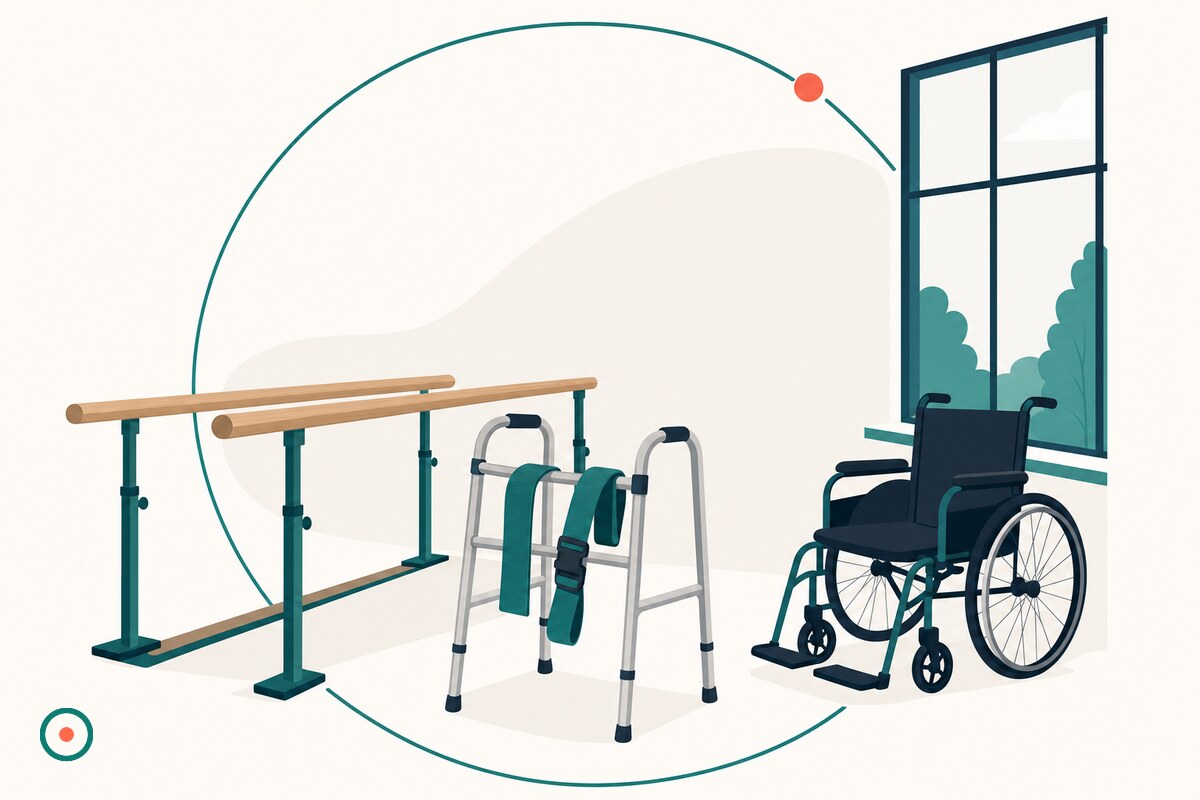
Rehab nurse interview questions test five things: do you understand that the goal is independence and not doing everything for the patient, can you keep someone safe while letting them try (falls, skin, swallowing), will you recognize the emergencies that are specific to rehab patients, such as autonomic dysreflexia after a spinal cord injury, can you work inside a team of PT, OT, speech therapy and a rehab physician, and can you teach the patient and family well enough that discharge home actually works. Rehab panels know a new grad hasn’t run a bowel program or managed a fresh spinal cord injury. They’re listening for safety, patience, and whether you’d call for help at the right moment.
Below are the rehab nurse interview questions inpatient rehabilitation hospitals and acute rehab units actually ask, each with a copy-ready sample answer, plus the rehab-specific scenarios most online lists skip. For the full panel across specialties, start with our nursing interview questions hub.
Quick honesty check: Many inpatient rehab hospitals and units hire new graduates, sometimes into a formal residency, because rehab builds strong med-surg fundamentals. But it is not “easier med-surg.” Patients are often medically complex (stroke, spinal cord injury, brain injury, amputation, joint replacement, cardiac and pulmonary conditions), and the nurse is with them 24 hours a day while therapy sees them for a few hours. Read the posting for the unit’s patient mix before you interview.
What does a rehab nurse do?
Know the setting before you walk in. In an inpatient rehabilitation facility (IRF) or acute rehab unit, patients come after a hospital stay to do intensive therapy. Under Medicare’s coverage rules, that intensity is generally about three hours of therapy a day, at least five days a week (or at least 15 hours over a 7-day period in documented cases), with care led by a rehabilitation physician and an interdisciplinary team that meets at least weekly. That shapes the nurse’s whole day:
- Carry-over of therapy. PT and OT teach a transfer or a dressing technique; the nurse makes the patient practice it at 7 p.m. and 3 a.m. instead of doing it for them.
- Timing care around therapy. Meds, pain control, and personal care are planned so the patient is ready (and pre-medicated for pain, if ordered) when therapy arrives.
- Bowel and bladder programs. Timed voiding, bladder scans, intermittent catheterization, and scheduled bowel programs, especially after stroke and spinal cord injury.
- Preventing complications. Falls, pressure injuries, aspiration, DVT, orthostatic hypotension, infection, and autonomic dysreflexia.
- Swallow and diet safety. Following speech therapy’s diet and liquid consistency and the aspiration precautions for each patient.
- Teaching for discharge. Patient and family education on meds, skin checks, transfers, and warning signs, often weeks before discharge.
- Function scoring. Medicare IRFs record function on the IRF-PAI using Section GG self-care and mobility items (the older FIM scale was retired from the IRF-PAI in 2019), and nursing contributes to those observations.
The mental shift panels want to hear: in acute care, you fix the problem. In rehab, you coach the patient to do it themselves, safely.
How do I prepare for a rehab nurse interview?
Prepare in four layers:
- Learn the unit. Is it a freestanding rehab hospital or a unit inside an acute hospital? Stroke, spinal cord injury, brain injury, ortho, or general? Look for any specialty programs on its website.
- Pre-script “Why rehab?” — specific and true, not “it’s slower than med-surg.”
- Rehearse 4–5 STAR stories: a patient who wanted you to do everything for them, a teaching moment with teach-back, a time you worked with PT/OT/speech, a time you spoke up about safety, and a busy shift you organized.
- Say two scenario answers out loud: autonomic dysreflexia and a post-stroke patient coughing on thin liquids. Both are covered below.
Bring your clinicals: a med-surg, neuro, or ortho rotation, any time you watched or helped with PT, a stroke patient you cared for, or discharge teaching you did. If your interview includes the standard openers, our tell me about yourself guide and new-grad RN interview questions cover them.
What are the most common rehab nurse interview questions and answers?
”Why do you want to work in rehab nursing?”
Show that you understand the goal of rehab, then make it personal and true.
“On my neuro rotation I cared for a man two days after a stroke who couldn’t feed himself, and I never found out what happened to him. Later I did a clinical day on an acute rehab unit and saw patients with the same diagnosis practicing transfers, relearning to dress, and going home with their families trained. I want to be the nurse who sees that part. I also like that rehab nursing is teaching all day long, and that the team works so closely together — PT, OT, speech, the physician, and nursing all working on the same goals."
"What’s the difference between rehab nursing and med-surg?”
“The fundamentals are the same — assessment, meds, safety, catching a change early. The difference is the goal and the pace. In med-surg the patient is usually there to get stable. In rehab the patient is stable enough to work, and my job is to help them practice what therapy teaches, prevent the complications that would send them back to the hospital, and get them and their family ready for home. That means I often don’t do the task for the patient — I stand by, cue, and keep them safe while they do it.”
If you’re also interviewing on acute units, our med-surg nurse interview questions cover that panel.
”How do you balance patient independence with safety?”
This is the core rehab question. Show that you don’t choose one over the other.
“I start with what the team has documented — the patient’s current transfer level, assistive device, whether they need a gait belt, one or two assists, and their fall-risk plan. Within that, I let them do as much as they safely can and I cue instead of taking over. If I’m not sure the patient is safe to do something new, I don’t guess — I check with PT or OT, because they assess that level. And I keep the basics in place: call light in reach, bed low, non-slip socks, scheduled toileting, and an alarm if the plan calls for one."
"A patient asks you to just do it for them — dress them, transfer them. What do you do?”
“I’d acknowledge it first, because they’re exhausted and frustrated, and that’s real. Then I’d explain why practicing matters — ‘Every time you do this here, it’s one less thing your wife has to do at home.’ I’d break the task into small steps and let them do the parts they can, and I’d help with the rest. If it’s a pattern, or they seem low, I’d tell the team, because fatigue, pain, or depression could be behind it, and those need treatment, not just encouragement."
"How do you work with PT, OT, and speech therapy?”
“I treat their recommendations as part of the care plan. If OT taught a dressing technique, I use the same cues so the patient hears one method. If speech changed the diet to thickened liquids, I make sure the tray, the sign, and the family all match. I also report back — if a patient’s pain spiked overnight or they were up three times to the bathroom and didn’t sleep, therapy needs to know that before the morning session. And I bring what I’ve seen to team conference, because nursing sees the patient at night and on weekends."
"How do you teach a patient and family before discharge?”
“I start early, not on the last day. I ask what they already know and what scares them, then teach one or two things at a time — for example, skin checks and repositioning one day, medications another. I have them show me, not just tell me: the daughter does the transfer with me standing by, or the patient explains their meds back to me. If they can’t do it yet, that’s important information for the team and the discharge plan."
"How do you prioritize when three patients need you at once?”
“Safety first. A patient trying to get up alone who’s a high fall risk, a patient with a sudden headache and high blood pressure, or anyone with a change in breathing or neuro status comes before a routine request. Then time-sensitive things like scheduled meds and a patient who needs to be ready for therapy. If I can’t get to someone safely, I ask a tech or another nurse for help rather than leaving them waiting."
"Tell me about a time you worked with someone outside of nursing to solve a problem.”
Use STAR and pick a real partner.
“S: On my med-surg preceptorship, a patient recovering from a hip replacement kept refusing to walk with PT. T: I wanted to understand why before anyone labeled him noncompliant. A: I talked with him and found out his pain was worst in the morning when PT came, and his pain medication was scheduled after therapy. I told my preceptor and the physical therapist, and with the provider’s order we gave his pain medication before his session. R: He walked the hallway that afternoon. I learned to look for the practical reason first.”
What scenario questions do rehab nurse interviews ask?
Use a think-out-loud structure: what I see → what worries me → what I do first → who I tell (SBAR) → what I document. For more practice with this format, see our situational nursing interview questions and critical thinking nursing interview questions.
”Your patient with a T4 spinal cord injury says he has a pounding headache. His blood pressure is much higher than his baseline. What do you do?”
This is the classic rehab question. The panel wants to hear that you recognize autonomic dysreflexia — a medical emergency in people with spinal cord injuries at or above about T6 — and that you look for the trigger.
“With an injury at T4, a pounding headache and a big jump in blood pressure make me think of autonomic dysreflexia first. I’d stay with him and call for help. I’d sit him upright and lower his legs if allowed, loosen anything tight — clothing, abdominal binder, leg bag straps — and check his blood pressure every few minutes. Then I’d look for the cause, starting with the most common: the bladder. Is the catheter kinked or blocked, or is his bladder full? Then bowel and skin. I’d follow our unit’s autonomic dysreflexia protocol and notify the provider right away in SBAR: ‘Mr. Lee, T4 spinal cord injury, sudden pounding headache, blood pressure 190 over 100 from a baseline of 100 over 60, sitting him up and checking his bladder now — I need you to evaluate him and give orders.’ I’d document times, readings, the cause I found, and how he responded."
"A patient two weeks after a stroke coughs every time she drinks water at lunch. What do you do?”
“Coughing with thin liquids could mean she’s aspirating. I’d stop the liquids, sit her fully upright, and check her breathing, lung sounds, and oxygen saturation. I’d check what diet and liquid consistency speech therapy ordered — maybe she was given the wrong tray. I’d keep her on what’s ordered or hold oral intake per policy, and notify speech therapy and the provider so she can be re-evaluated. I’d also make sure the family isn’t bringing in drinks she can’t safely have, and I’d document what happened and her vital signs."
"Your patient has been told to call for help before getting up, but you find him walking to the bathroom alone. What do you do?”
“I’d get to him safely and help him without startling him — gait belt on, walker in front of him, and help him finish what he’s doing. Then, without scolding, I’d ask why he didn’t call. Often it’s urgency — he couldn’t wait. That tells me something: maybe he needs scheduled toileting every two hours, the urinal within reach, or a bed or chair alarm per our policy. I’d update the care plan, tell the charge nurse and PT, and make sure the next shift knows."
"Your patient stands up for the first time in days and says she feels dizzy and her vision is going gray. What do you do?”
“That sounds like orthostatic hypotension. I’d sit her back down — or lower her safely to the bed or chair, never let her fall — and check her blood pressure and heart rate. Once she’s stable, I’d raise her slowly in stages: sitting at the edge of the bed, dangling her legs, then standing, checking her blood pressure at each step if the plan calls for orthostatic vitals. I’d tell the provider and therapy, because she may need compression stockings, an abdominal binder, a medication review, or a slower mobility plan."
"During your morning skin check, you find a reddened area over the sacrum that doesn’t blanch.”
“Non-blanchable redness on intact skin is a stage 1 pressure injury, so it’s a warning sign. I’d take pressure off the area right away, start or tighten the repositioning schedule, check the support surface and wheelchair cushion, and look at moisture and nutrition. I’d report it to the charge nurse and provider, follow our wound policy — which may include a wound care nurse consult — and document the size and location. I’d also teach the patient how to do pressure relief in the wheelchair, because that’s a skill he needs for life.”
For deeper wound questions, see our wound care nurse interview questions.
”Your patient with a brain injury is getting agitated, pulling at his clothes and trying to climb out of bed.”
“First, safety for him and for me. I’d lower stimulation — turn off the TV, dim the lights, limit visitors in the room — and speak calmly in short sentences. I’d look for a cause I can fix: pain, a full bladder, constipation, hunger, being too hot, or a new medical problem like infection. I’d stay with him or get a sitter if needed, follow the unit’s behavior plan, and avoid restraints unless policy allows them as a last resort. I’d tell the charge nurse and the provider, and document what helped so the next shift can use it."
"A patient’s daughter says, ‘Mom isn’t ready to go home. She needs to stay longer.’”
“I’d listen first — what exactly is she worried about? Usually it’s something specific, like getting Mom to the bathroom at night. I’d show her what Mom can do now, invite her to practice the transfer with us, and bring the concern to the case manager and the team, because the discharge plan may need more equipment, home health, or family training. I wouldn’t promise a longer stay or argue about it — the team decides that together, and the family should be part of the conversation.”
Can a new graduate become a rehab nurse?
Yes — inpatient rehab is one of the more realistic places for a new grad to start, but expectations vary by hospital.
- Many rehab hospitals and units hire new grads, often with a longer orientation or a nurse residency program. Ask how long orientation lasts and who precepts you.
- Med-surg skills transfer directly. Assessment, medication safety, wound care, catheter care, and patient teaching are daily rehab work.
- Certification is a later goal. The Certified Rehabilitation Registered Nurse (CRRN) credential from the Association of Rehabilitation Nurses requires an active RN license plus two years of rehabilitation nursing practice within the last five years (or one year plus one year of graduate nursing study). Don’t claim it — say it’s your goal.
A strong answer sounds like:
“I know I’ll be learning bowel and bladder programs, spinal cord and brain injury care, and how to score function from experienced rehab nurses. What I bring from day one is solid assessment, a careful approach to falls and skin, patient teaching with teach-back, and the habit of telling my preceptor early when something doesn’t look right. In two years, I’d like to sit for the CRRN.”
If the role is in the patient’s home instead of a hospital, our home health nurse interview questions cover that panel.
What questions should you ask in a rehab nurse interview?
Ask questions that show you’re thinking about safety, learning, and teamwork:
- “What’s your typical patient mix — stroke, spinal cord injury, brain injury, ortho, or medical?”
- “How long is orientation for new grads, and is there a residency program?”
- “How do nurses take part in team conference?”
- “What’s the nurse-to-patient ratio on days and on nights, and how much tech support is there?”
- “How does the unit handle falls — what’s the plan when a patient wants independence but isn’t safe yet?”
- “What do your strongest new nurses do differently in their first six months?”
For more options, see questions to ask the interviewer in a nursing interview.
Mistakes that weaken a rehab interview answer
- Doing everything for the patient. “I’d just help him get dressed so we’re on time” misses the point of rehab.
- Ignoring safety for independence. Independence happens within the documented transfer level and fall plan, not instead of it.
- Missing autonomic dysreflexia. If you interview for a unit with spinal cord injury patients, know the signs, the bladder check, and “sit them up.”
- Leaving therapy out. Name PT, OT, speech, and the case manager in your answers. Rehab is a team sport.
- Saying “rehab is slower.” Panels hear “I want an easy job.” Talk about teaching and recovery instead.
- Inventing credentials. Only name certifications you hold or are working toward.
How to prepare for rehab nurse interview questions in one evening
- Look up the unit’s patient population and write down which diagnoses they focus on.
- Practice two scenario answers: autonomic dysreflexia and a stroke patient coughing on liquids.
- Write three STAR stories: a patient you encouraged to do more, a teaching moment with teach-back, and a time you worked with a therapist.
- Prepare your honest path sentence about orientation and the CRRN as a later goal.
- Say your “Why rehab?” answer out loud until it’s under 90 seconds.
For more behavioral structure, see nursing behavioral interview questions.
Rehab nurse interview FAQ
Is a rehab nurse interview a panel interview?
Often. Many hospitals use a panel of the nurse manager, a charge nurse or educator, and sometimes a staff nurse or therapist. Answer each question fully, even if it feels similar to one you already answered.
Is rehab nursing physically demanding?
Yes. You’ll help with transfers and mobility all shift, usually with gait belts and lift equipment. Panels may ask how you protect your back — say you use the equipment and ask for help instead of lifting alone.
Is “rehab nurse” the same as “rehabilitation nurse”?
Yes. Job postings use both, and you may also see “acute rehab RN” or “inpatient rehabilitation RN.” The interview questions are the same.
How long should my answers be?
About 60 to 90 seconds for behavioral stories and one to two minutes for scenarios. It’s fine to say, “I’d follow the unit’s protocol here — I can walk through the steps if that’s helpful.”
Practice saying the scenario out loud
Reading a good autonomic dysreflexia answer is one skill. Saying it calmly while a panel scores you is another. The candidates who do well have practiced the same pattern until it’s automatic: “here’s what I see, here’s what worries me, here’s what I do first, and here’s who I tell.” Pick two scenarios tonight and say them out loud, timed.
“Tell me about a time you worked with someone outside of nursing to solve a problem”
You just read a strong answer to that. Saying one to three people who are deciding whether to hire you is a different skill — Roundly asks this exact question in a mock Rehab panel, listens, and scores the clinical reasoning underneath.
Answer this one out loud →You've read the answers. Now say one out loud.
Reading a sample answer and delivering it to a panel that's deciding whether to hire you are two different skills. Roundly runs a mock Rehab panel that asks these exact questions, listens to your answer, and scores your clinical reasoning and structure — not just how confident you sounded.
Start a mock Rehab panelTakes about two minutes to set up. Finish 15 panels without an offer and we refund you.