Case Manager Nurse Interview Questions (2026): Sample Answers & Scenarios
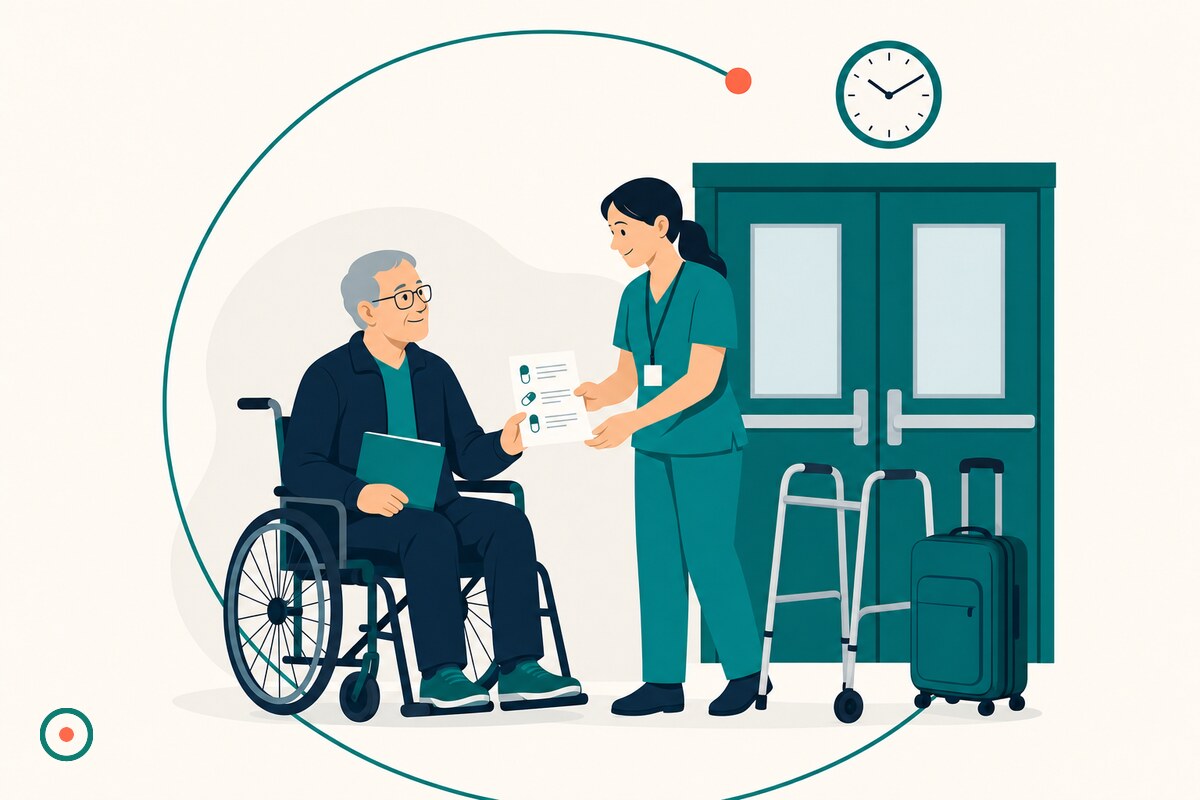
A nurse case manager interview checks whether you can move a patient safely from one level of care to the next: you assess what they need, find the right next setting and services, deal with insurance and paperwork, and keep the patient, family, providers and payer on the same plan. Expect four kinds of questions: why case management, behavioral questions about advocacy, conflict, organization and difficult families, process questions about discharge planning and utilization review, and a scenario, usually a discharge that is about to fail. The panel is not testing whether you have memorized InterQual. It wants to hear that you think in terms of safety, the patient’s own goals, and closing the loop.
This guide covers what a nurse case manager does in each setting, whether a new grad can get the job, the questions panels ask, sample answers you can adapt, and five case management scenarios with SBAR.
What does a nurse case manager do?
A nurse case manager is an RN who coordinates a patient’s care across settings instead of delivering most of the hands-on care. The title covers several jobs, and the interview changes with each one:
- Hospital (inpatient) case manager. Usually two jobs in one: utilization review (checking that the patient’s status, inpatient or observation, and continued stay meet medical necessity criteria such as InterQual or MCG) and discharge planning (home with services, skilled nursing facility, acute rehab, long-term acute care, hospice). You work with physicians, social workers, therapy, pharmacy and the payer.
- Home health or hospice RN case manager. You carry a caseload of patients at home, make visits, manage the plan of care and coordinate the rest of the team. This is the version most open to new grads. Our home health nurse interview questions and hospice nurse interview questions go deeper into those panels.
- Payer or care management (insurance, ACO, clinic). Mostly phone and computer work: following high-risk members, prior authorizations, transitions of care and follow-up after discharge.
- Community, workers’ compensation, or home-care agency case manager. Assessments in the home, service plans, caregiver supervision and community resources.
Read the posting carefully and answer for the setting it describes. “Case manager” at a hospital and “case manager” at a home-care agency are different interviews.
Can a new grad nurse be a case manager?
Sometimes, but mostly outside the hospital. Hospital case management roles usually want bedside experience first. ChristianaCare’s RN Case Manager posting this fall, for example, requires a BSN and 3 to 5 years of acute care experience in a hospital, with inpatient case management experience preferred. Panels want someone who has already seen hundreds of discharges go right and wrong.
New grads do get hired into case manager titles in home health, hospice and home-care agencies. In fall 2026 postings, Dignity Home Health & Hospice in Utah advertised a Home Health/Hospice RN Case Manager role with “experience preferred but will train the right person. New graduates welcome,” and FreedomCare advertised field-based Case Manager, RN roles in Ohio marked “New Graduates Welcome!” for in-home assessments and care coordination.
Certification is a later step, not an entry requirement. The CCM from the Commission for Case Manager Certification requires 12 months of full-time case management experience supervised by a CCM, or 24 months without that supervision. ANCC’s CMGT-BC requires the equivalent of 2 years as a full-time RN and 2,000 hours of case management practice in the last 3 years, and ANCC is retiring it: new applications are accepted through December 31, 2026, and testing ends December 31, 2027. Don’t claim either one in an interview. Saying you know the path is enough.
If you’re a new grad aiming at hospital case management, the usual route is one to three years on a unit with lots of discharges, such as med-surg, telemetry or a step-down unit. Our med-surg nurse interview questions cover the panel for that first job, and you can say in that interview that case management is your long-term goal.
What do case manager interviewers look for?
- Discharge thinking from day one. Do you ask on admission where the patient lived, with whom, how they got around, and what will be different when they leave?
- Advocacy with limits. You push for what the patient needs, respect their right to refuse, and document. You don’t promise things the team or the insurer hasn’t approved.
- Organization. A hospital case manager may follow a whole unit’s patients. How do you decide who to see first?
- Communication with many parties. Physicians, families, facilities, payers, home health agencies. Clear, short updates, and you close the loop.
- Comfort with rules. Medicare notices, observation vs. inpatient status, prior authorization. You don’t need to know everything, but you shouldn’t be surprised that these rules exist.
- Honesty about your experience. If you’re new, say so, then show how you think.
Common case manager nurse interview questions
Motivation and background
- Why do you want to be a case manager?
- What in your clinical experience prepares you for case management?
- Why this setting (hospital, home health, payer)?
- Where do you see yourself in five years?
Behavioral (STAR)
- Tell me about a time you advocated for a patient.
- Tell me about a conflict with a physician or a family and how you resolved it.
- Describe a time you had too many priorities at once.
- Tell me about a time a plan fell apart and what you did next.
- Tell me about a patient who didn’t follow the plan.
Process and role-specific
- Walk me through how you’d plan a discharge from admission to the day the patient leaves.
- How would you prioritize your caseload at the start of the day?
- What do you know about InterQual or MCG?
- What’s the difference between inpatient and observation status, and why does it matter to the patient?
- How do you handle a patient who refuses the recommended placement?
- How do you make sure a patient actually gets their follow-up after discharge?
- What would you do if insurance denied a skilled nursing facility stay?
For the universal openers, see tell me about yourself in a nursing interview and our nursing behavioral interview questions.
Sample answers
”Why do you want to be a case manager?”
“In clinicals and on my preceptorship, the patients I worried about most weren’t the sickest ones, they were the ones going home on Friday with no ride to their follow-up, a new insulin pen nobody had practiced with, or a daughter who worked nights. I liked the part of the shift where I helped fix that. Case management is that work full time: looking ahead from admission, getting the right services in place, and making sure the plan still works once the patient is out of our building. I also like that it’s detail work with real consequences, because one missed authorization or a wrong address on a home health referral can undo a good hospital stay.”
Avoid “I’m burned out on the bedside” or “I want a Monday-to-Friday job.” Panels hear those every week.
”Walk me through how you’d plan a discharge.”
“It starts on admission. I’d review the chart and talk to the patient and family: where they live, who helps them, stairs, equipment they already have, their insurance, their pharmacy, and what they want. I’d compare that with what therapy and the physician expect at discharge, so we know early if home is realistic or if we’re looking at home health, rehab or a facility. Then I’d start the work that takes time first: referrals, authorizations, equipment, transport. I’d update the plan in interdisciplinary rounds as the patient changes, give any required notices on time, and on the day of discharge confirm that the receiving side has what they need: orders, medication list, follow-up appointments. If I can, I’d check that the follow-up call or first home visit actually happened."
"How would you prioritize your caseload this morning?”
“First the discharges planned for today, especially anyone going to a facility or needing equipment or transport, because those fail if they’re not set up early. Next, new admissions I haven’t assessed yet, and anyone flagged as high risk: readmitted within 30 days, lives alone, new oxygen, a new diagnosis like heart failure. Then status questions, such as an observation patient close to needing a decision. Then routine follow-ups. I’d check in with the charge nurse and the physicians at rounds, because a plan can change in five minutes."
"Tell me about a time you advocated for a patient.” (STAR)
S: “On my med-surg preceptorship, an 81-year-old man recovering from pneumonia was set to go home the next morning. He lived alone on the second floor of a walk-up.”
T: “When I walked him in the hall he was short of breath after about thirty feet and needed to stop twice. I didn’t think he could manage his stairs.”
A: “I told my preceptor and the charge nurse what I’d seen, documented the walk, and we asked the physician for a PT evaluation before discharge. I also told the case manager he’d mentioned his neighbor did his shopping.”
R: “PT recommended home health and a short course of therapy, and the case manager set up services before he left. I learned that one honest observation of how a patient actually moves can change a discharge plan.”
Use your own story. A real clinical moment told plainly beats a polished invented one.
”A patient refuses the skilled nursing facility you recommended. What do you do?”
“First I’d find out why: cost, a bad experience, a pet at home, fear of never leaving. Often there’s a concern we can solve. I’d make sure she understands the risks of going home without that level of care, in plain language, and involve her family if she wants them there. If she has decision-making capacity, it’s her decision. Then my job becomes making home as safe as possible: home health, equipment, a medical alert device, family teaching, a follow-up appointment soon. I’d document the conversation and the plan, and tell the physician and the team. If I had doubts about her capacity, I’d raise that with the physician rather than decide it myself."
"What do you know about InterQual or MCG?”
“They’re the two common sets of medical necessity criteria that hospitals and payers use to decide whether a patient meets inpatient or observation level of care and whether a continued stay is justified. I haven’t used either one in a case management role, so I’d learn your system’s tool and workflow in orientation. What I can bring now is the clinical side: knowing what makes a patient sicker or more stable, and documenting that clearly, because the criteria only work if the chart shows the real picture.”
If you have used one, say which and in what setting. If not, don’t bluff. Panels can tell in one follow-up question.
”How do you handle a conflict with a physician about a discharge date?”
“I’d talk to the physician directly and privately, with specifics, not opinions. For example: ‘PT is recommending acute rehab, the authorization isn’t back yet, and if he goes home today he has no one there until Thursday.’ Then I’d ask what they need from me and offer options, like a peer-to-peer review with the payer or a safe interim plan. If we still disagreed and I believed the discharge was unsafe, I’d follow the chain of command, usually my case management leader, and document. It’s not about winning; it’s about the plan being safe.”
Case manager scenarios with SBAR
In a case management scenario, the panel wants to hear what you check first, who you call, and how you close the loop. Use SBAR for calls to physicians, payers and receiving facilities. For more practice with this format, try our situational nursing interview questions and critical thinking nursing interview questions.
Scenario 1: the discharge today with no medications
“A 64-year-old man admitted with heart failure is being discharged this afternoon on a new medication. At 1000 he tells you he can’t afford it and doesn’t know how he’ll get home.”
“I’d take both problems seriously, because a heart failure patient who goes home without his medication is likely to come back. For the medication, I’d check his coverage, ask the pharmacy whether the hospital has a meds-to-beds or assistance program, and ask the physician if there’s an equally effective option his plan covers. For the ride, I’d ask about family or friends, then the transport benefits his insurance offers or hospital resources. I’d make sure he has a follow-up appointment within the time the physician wants, a scale and teaching on daily weights. I’d tell the nurse and the physician what I’m working on so the discharge time is realistic.”
S: “This is the case manager on 4 North about Mr. Lewis in room 8, who’s going home today. He says he can’t afford the new medication.”
B: “He was admitted with a heart failure exacerbation and started on it during this stay.”
A: “His plan doesn’t cover it. Without it I’m worried he’ll be readmitted.”
R: “Is there a covered alternative you’d be comfortable with? If not, I’ll ask pharmacy about assistance before 1300 so we don’t delay his discharge.”
Scenario 2: the observation patient who thinks she’s admitted
“A Medicare patient has been in observation for 30 hours. Her son tells you, ‘She’s been admitted, so Medicare will cover rehab after this.’”
“I’d explain gently that his mother is an outpatient receiving observation services, not an inpatient, even though she’s in a hospital bed overnight, and that this can affect her costs and her coverage for a skilled nursing facility afterward. Hospitals must give Medicare patients in observation for more than 24 hours the Medicare Outpatient Observation Notice (MOON), with a verbal explanation, no later than 36 hours after observation starts. So I’d make sure it has been given and explained, or give it now. I’d answer what I can, bring in the physician if the status is being reviewed, and connect him with financial counseling for specific cost questions. I wouldn’t guess at what Medicare will pay.”
Scenario 3: the patient who wants to appeal the discharge
“A Medicare inpatient is scheduled to go home tomorrow. Her daughter says she isn’t ready and asks how to stop the discharge.”
“Every Medicare inpatient gets An Important Message from Medicare (IM) within two calendar days of admission, and a follow-up copy no more than two calendar days before discharge. That notice explains her right to a fast appeal and the phone number to call. I’d make sure she has the follow-up copy, explain the appeal process honestly, and not discourage it. At the same time I’d ask what specifically worries them, because it may be something we can fix: equipment, teaching, home health. I’d share their concerns with the physician and the team, and document.”
Scenario 4: the denied skilled nursing facility stay
“Therapy recommends a skilled nursing facility after a hip fracture repair. The insurer denies the authorization at 1400 on a Friday.”
“I’d find out the reason for the denial and the deadline to respond, then tell the physician right away and ask whether they’ll do a peer-to-peer review with the payer’s medical director, since that’s often the fastest way to reverse a denial. I’d send updated therapy notes that show what she can and can’t do. While that’s in progress, I’d prepare a backup plan with the patient and family: acute rehab if she qualifies, or home with home health and equipment if that’s safe. I’d keep the patient and family updated, and I wouldn’t discharge her to an unsafe plan just because it’s Friday.”
S: “This is the case manager for Mrs. Ortiz in room 22. Her SNF authorization was denied at 1400.”
B: “She’s post-op day 3 from a hip fracture repair. PT recommends SNF; she needs one-person assist for transfers and lives alone.”
A: “The denial says she doesn’t meet criteria, but I don’t think the payer has the latest therapy notes. Going home alone isn’t safe.”
R: “Can you do a peer-to-peer this afternoon? I’ll send the notes and have the payer’s number ready.”
Scenario 5: the home health patient gaining weight
“You’re a home health RN case manager. During a visit, a heart failure patient discharged 5 days ago has gained 5 pounds since discharge, has new ankle swelling and says he is more short of breath walking to the bathroom.”
“I’d do a full assessment: lung sounds, oxygen saturation, vital signs, edema, and a medication check, including whether he picked up and is taking his diuretic and what he’s eating. If he’s in distress, I’d call 911. If he’s stable, I’d call his physician from the home with SBAR and the numbers, follow the orders, and plan a follow-up visit or call. Then I’d teach back daily weights and when to call, and document. For a case manager, catching this at home is the point of the job.”
Questions to ask the case management panel
- How many patients does a case manager follow here, and how are assignments made?
- Is the role combined (utilization review and discharge planning) or split between RNs and social workers?
- Which criteria tool do you use, InterQual or MCG, and how is it taught in orientation?
- How long is orientation, and who precepts new case managers?
- How do case managers and social workers divide the work?
- Do you support CCM certification once I’m eligible?
More ideas: questions to ask the interviewer in a nursing interview.
How do you prepare for a case manager nurse interview?
- Know which version of the job it is: hospital, home health, hospice, payer or community. Read the posting and the employer’s site.
- Prepare your “why case management” answer with one real patient moment, not a lifestyle reason.
- Practice the discharge walk-through from admission to the follow-up call, out loud.
- Learn the basics: inpatient vs. observation, the IM and MOON notices, what InterQual and MCG are, the main post-acute options (home health, SNF, acute rehab, LTACH, hospice). If the role includes rehab placements, our rehab nurse interview questions explain what those units look for, and long-term care nurse interview questions cover the nursing home side.
- Build five STAR stories: advocating for a patient, a conflict, a plan that fell apart, too many priorities, and a difficult family.
- Be honest about experience. If you’re a new grad, say what you’ve done and how you’ll learn.
Dress business professional (what to wear to a nursing interview). For the general round, read our new-grad RN interview questions and RN interview questions.
Your case manager interview checklist
- A specific “Why case management?” answer built on a real patient.
- A discharge walk-through that starts on admission.
- A caseload prioritization answer.
- An answer for a patient who refuses placement that respects her choice and still keeps her safe.
- One scenario ending with an SBAR call to a physician or payer.
- An honest line about InterQual or MCG.
- Five STAR stories, each with a clear result.
- Three questions for the panel.
- A thank-you email within 24 hours (templates here).
Practice the scenarios out loud
Case management answers sound simple when you read them. In the room, most candidates list tasks without an order, forget to say who they’d call, or promise a family something only the team can approve. Saying your answers out loud until the order is automatic is the fix.
Roundly runs realistic mock nurse panels for new-grad RNs. You answer behavioral questions and clinical scenarios out loud, the panel asks follow-ups, and Roundly scores the clinical reasoning and structure of what you said, not just how smooth it sounded. It was built with nurse recruiters and hiring managers.
Practice a case management panel interview with Roundly →
“Walk me through how you'd plan a discharge”
A strong answer to this one is further down. Saying one to three people who are deciding whether to hire you is a different skill — Roundly asks this exact question in a mock Case Management panel, listens, and scores the clinical reasoning underneath.
Answer this one out loud →You've read the answers. Now say one out loud.
Reading a sample answer and delivering it to a panel that's deciding whether to hire you are two different skills. Roundly runs a mock Case Management panel that asks these exact questions, listens to your answer, and scores your clinical reasoning and structure — not just how confident you sounded.
Start a mock Case Management panelTakes about two minutes to set up. Finish 15 panels without an offer and we refund you.