Occupational Health Nurse Interview Questions (2026): Sample Answers & Scenarios
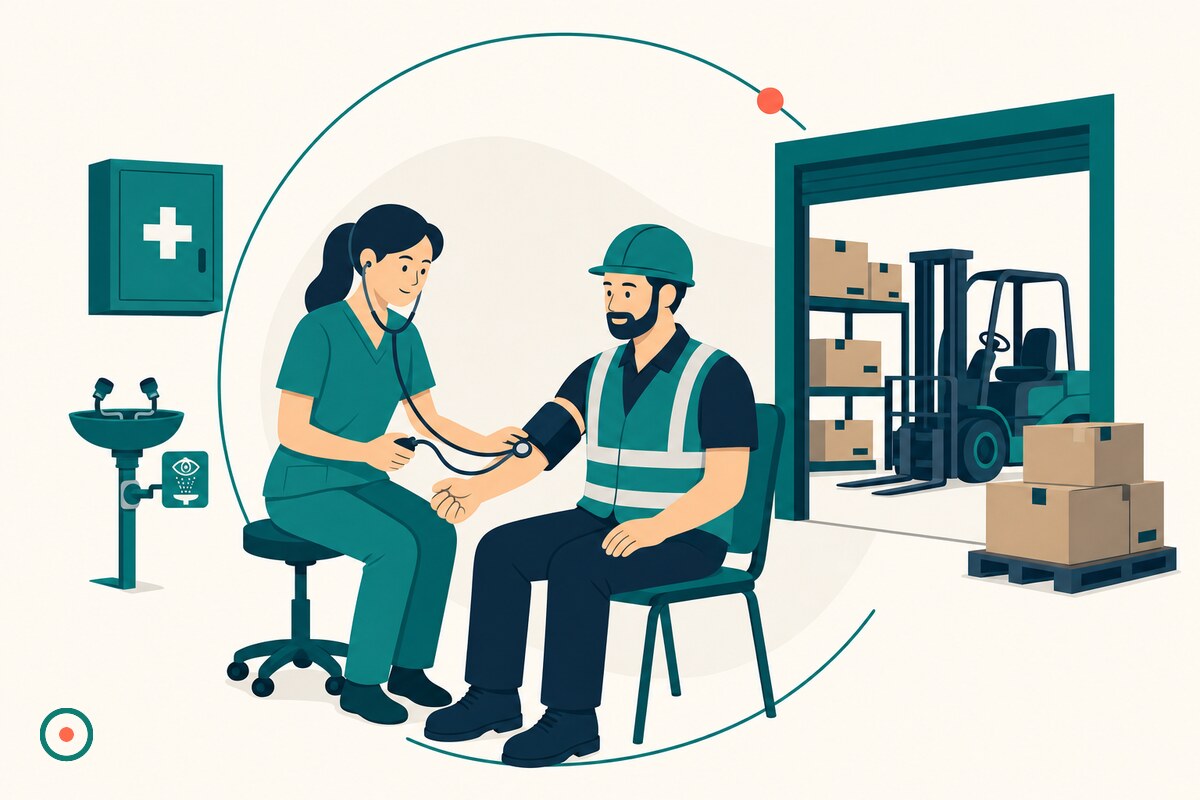
An occupational health nurse interview checks whether you can keep a workforce healthy and safe without a doctor down the hall: you triage injuries and sudden illness on site, run screenings and surveillance programs, handle exposures like needlesticks, manage return to work, and keep employee medical information away from managers who shouldn’t see it. Expect four kinds of questions: why occupational health, behavioral questions about judgment, confidentiality and conflict, process questions about screenings, OSHA rules and workers’ compensation, and a scenario, usually an injured worker and a supervisor with an opinion. The panel isn’t checking whether you’ve memorized the Code of Federal Regulations. It wants to hear that you know when to treat, when to send out, when to call 911, and what you’re allowed to tell the employer.
This guide covers what an occupational health nurse does in each setting, whether a new grad can get the job, the questions panels ask, sample answers you can adapt, and five occupational health scenarios with SBAR.
What does an occupational health nurse do?
An occupational health nurse (OHN) is an RN whose patients are a workforce. The employer is paying, but the nursing duty is still to the worker in front of you. The title covers several jobs, and the interview changes with each one:
- Hospital employee health. Your patients are the hospital’s own staff. New-hire health screenings, immunization records and titers, flu vaccine clinics, TB screening, respirator fit testing, needlestick and blood exposure follow-up, and work injury intake. This is the version most new grads see first.
- Industrial or plant nurse. A clinic inside a factory, warehouse, meatpacking plant or refinery. First aid and emergency response, hearing tests, drug and alcohol testing, injury logs, and working closely with the safety manager. Shifts can follow production, including second shift and on-call.
- Corporate or office occupational health. Wellness programs, health coaching, ergonomic assessments, travel health, leave and accommodation support. Less hands-on care, more programs and data.
- Occupational medicine clinics. Clinics that serve many employers: pre-placement physicals, DOT exams and drug screens, workers’ compensation visits. Pace is closer to clinic nursing than to a plant.
- Government employee health. City and county governments, and the VA’s Employee Occupational Health programs, run their own clinics for their workforce.
Read the posting carefully and answer for the setting it describes. A hospital employee health panel will ask about exposures and immunizations. A plant panel will ask about lacerations, hearing tests and what you’d do when production wants a worker back on the line.
Can a new grad nurse work in occupational health?
Sometimes, more often than people think, but not everywhere. Many industrial postings want bedside, ER or urgent care experience first. JBS, for example, asks for at least one year of nursing experience after licensure for its plant occupational health nurse roles in Nebraska, with occupational health, urgent care, workers’ compensation or emergency experience preferred. That makes sense: on second shift at a plant, you may be the only clinician in the building.
New grads do get hired, especially into employee health programs with a provider on the team. In November 2026, VA Employee Occupational Health RN postings in Buffalo, New York said “new graduates are welcome to apply,” and a per diem EOH RN posting in Des Moines, Iowa listed “New Grad” as the experience requirement. The Des Moines duties were a good summary of the job: new-employee screenings, flu vaccine tracking, post-exposure counseling, reporting work injuries, and medical surveillance. If a federal role interests you, our VA nurse interview questions explain how VA panels and the performance-based interview work.
Certification comes later. The COHN credential from the American Board for Occupational Health Nurses (ABOHN) requires an active RN license and 3,000 hours of occupational health nursing practice in the previous five years. The COHN-S adds a bachelor’s degree or higher. Don’t claim either in an interview. Saying you know the path, and that AAOHN is the professional association, is enough.
If you’re a new grad and the occupational health roles near you all want experience, a year in the ER, urgent care or a busy clinic is the usual bridge. Our ER nurse interview questions cover that panel, and you can say there that occupational health is your long-term goal.
What do occupational health interviewers look for?
- Triage judgment when you’re alone. Do you know what you can treat with first aid and standing orders, what needs a provider today, and what needs 911 right now?
- Confidentiality under pressure. Managers will ask what’s wrong with their employee. You share work restrictions, not diagnoses.
- Comfort with rules. OSHA recordkeeping, bloodborne pathogens, respirator and hearing programs, workers’ compensation. You don’t need to be an expert, but you shouldn’t be surprised these rules exist.
- Advocacy with limits. You protect the worker’s health and their right to report an injury, and you also understand the employer’s need to run a safe operation.
- Teaching and prevention. Much of the job is education: hand hygiene, lifting, hearing protection, heat, vaccines.
- Organization. Tracking hundreds of titers, fit tests, audiograms and due dates without letting anyone fall through.
- Honesty about your experience. If you’re new, say so, then show how you think.
Common occupational health nurse interview questions
Motivation and background
- Why do you want to work in occupational health?
- What in your clinical experience prepares you for this role?
- Why this setting (hospital employee health, plant, corporate, clinic)?
- Where do you see yourself in five years?
Behavioral (STAR)
- Tell me about a time you handled an emergency with limited resources.
- Tell me about a time you protected a patient’s privacy when someone pushed for information.
- Describe a time you disagreed with a manager or physician about a patient.
- Tell me about a time you taught a patient something and checked they understood.
- Tell me about a time you were juggling too many tasks. How did you prioritize?
Process and role-specific
- Walk me through how you’d handle a worker who comes in with an injury.
- What would you do after an employee reports a needlestick?
- What’s the difference between first aid and medical treatment for OSHA recordkeeping?
- How do you handle a supervisor who asks for an employee’s diagnosis?
- How do you approach return to work and light duty?
- What screenings and surveillance programs have you worked with (TB, titers, fit testing, audiograms, drug screens)?
- How do you stay current on OSHA and CDC guidance?
For the universal openers, see tell me about yourself in a nursing interview and our nursing behavioral interview questions.
Sample answers
”Why do you want to work in occupational health?”
“In clinicals I kept noticing how many of our patients had been hurt at work or had a chronic condition nobody had caught until it was serious: the warehouse worker with a back injury, the line cook with uncontrolled blood pressure. Occupational health is the place where you can catch those things early and sometimes prevent them, with the same people over months and years instead of one shift. I also like that the job is half prevention: screenings, vaccines, teaching. And I’m drawn to the responsibility of being the clinician people come to first, which means knowing when something is first aid and when it needs a provider or 911.”
Avoid “I want Monday to Friday” or “I want to get away from the bedside.” Panels hear those every week, and many occupational health jobs include second shift, on-call or weekends.
”Walk me through how you’d handle a worker who comes in with an injury.”
“First I’d check whether it’s an emergency: airway, breathing, circulation, uncontrolled bleeding, chest pain, a head injury with confusion, anything that needs 911. If it does, I call 911 and start care. If not, I take a history: what happened, when, the mechanism, what they were doing, PPE, and pain. Then I assess the injury, vital signs and anything relevant like neurovascular checks below a wrist injury. I treat within my protocols and standing orders, and if it needs more than first aid, I refer to the occupational medicine provider or urgent care per policy. I document objectively in the employee health record, start the injury report the employer requires, and tell the worker what to watch for and when to come back. Finally, I let the supervisor know the worker’s status and any restrictions, not the medical details."
"What would you do after an employee reports a needlestick?”
“Immediately: wash the site with soap and water, and for a splash to the eyes or mouth, flush with water. Then I’d get the details: the device, the depth, whether there was visible blood, and the source patient. Post-exposure evaluation is time-sensitive, so I’d follow our protocol right away, which usually means the employee is seen the same shift: baseline testing, a check of their hepatitis B vaccination and titer status, and source patient testing with consent per our policy and state law. If HIV post-exposure prophylaxis is a possibility, it needs to start as soon as possible, ideally within hours and no later than 72 hours, so I’d escalate to the provider immediately rather than wait. I’d document the exposure, complete the sharps injury log if that applies, and make sure the employee has their follow-up dates and someone to call. Many people are scared after a needlestick, so I’d also explain what happens next in plain language.”
OSHA’s Bloodborne Pathogens Standard (29 CFR 1910.1030) requires employers to make post-exposure evaluation and follow-up available immediately after an exposure incident, and to offer the hepatitis B vaccine within 10 working days of initial assignment to workers with occupational exposure. You don’t need to quote the numbers, but knowing the standard exists helps.
”What’s the difference between first aid and medical treatment for OSHA?”
“Under OSHA’s recordkeeping rule, a work-related injury that only needs first aid generally isn’t recordable on the 300 log, but medical treatment beyond first aid makes it recordable. OSHA has a specific first aid list: things like over-the-counter medication at nonprescription strength, wound coverings and butterfly strips, hot or cold therapy, non-rigid supports like elastic bandages, a tetanus shot, flushing a foreign body out of the eye. Sutures, prescription medication or prescription-strength doses, and rigid splints for immobilization are medical treatment. Days away from work, restricted duty or loss of consciousness also make a case recordable. In practice I’d treat what the injury needs and document accurately, and the recordability decision follows from the facts. I’d never under-treat to keep a case off the log.”
That last line matters. OSHA’s rule (29 CFR 1904.35) prohibits discouraging or retaliating against workers who report an injury, and a panel may be testing whether you’ll stand by it.
”A supervisor asks you what’s wrong with their employee. What do you say?”
“I’d tell the supervisor what they need to manage the work: whether the employee can work, any restrictions like no lifting over 20 pounds or no ladders, and how long the restrictions are expected to last. I wouldn’t share the diagnosis, test results or other medical details unless the employee has authorized it and policy allows it. I’d say it kindly: ‘I can’t share medical details, but here’s what they can and can’t do, and I’ll update you when the restrictions change.’ Employee medical information goes in a confidential medical file, separate from the personnel file. If the supervisor kept pushing, I’d involve my manager or HR."
"How do you approach return to work and light duty?”
“I start from the provider’s written restrictions and the actual job: what the work involves physically, hour by hour. Then I work with the supervisor and HR on whether there’s a modified job that fits those restrictions. I check in with the employee about how it’s going, because restrictions that look fine on paper sometimes aren’t on the floor, and I update the plan when the provider changes the restrictions. If a supervisor wants someone back at full duty before they’re cleared, I don’t sign off. I explain the restrictions and, if needed, take it up the chain. The goal is getting people back safely and early, not just early."
"Tell me about a time you protected a patient’s privacy.” (STAR)
“Situation: On my senior practicum on a med-surg unit, a visitor stopped me in the hallway and said she was the patient’s sister and wanted to know his biopsy results. Task: The patient hadn’t listed her as someone we could share information with, and he was asleep. Action: I told her I understood she was worried, but I couldn’t share his results without his permission, and that I’d let him and his nurse know she’d asked. When he woke up, I told my preceptor and the patient, and he chose to add his sister to his contacts. Result: She got her information the right way and thanked us later. In occupational health, the person asking will be a manager instead of a sister, but the answer is the same.”
Occupational health scenarios with SBAR
In an occupational health scenario, the panel wants to hear what you check first, whether it’s an emergency, what you treat versus refer, who you notify, and what you tell the employer. Use SBAR for calls to the provider, the ER or the safety manager. For more practice with this format, try our situational nursing interview questions and critical thinking nursing interview questions.
Scenario 1: the worker with chest pain at the plant clinic
A 54-year-old maintenance worker walks into the plant clinic, sweaty and pale, with chest pressure that started 20 minutes ago while he was carrying parts.
“This is 911 first, not after an EKG. I’d have someone call 911 and tell security to meet the ambulance, sit him down, check vital signs and oxygen saturation, and get the AED nearby. If our standing orders cover it and he has no allergy or contraindication, I’d give aspirin. I’d stay with him, watch for changes, and be ready to start CPR. When EMS arrives, I’d hand off with SBAR.”
SBAR to EMS:
- S: “54-year-old male, chest pressure for about 20 minutes, started while carrying parts, diaphoretic and pale.”
- B: “He reports high blood pressure, takes lisinopril, no known allergies. No trauma.”
- A: “BP 162/98, heart rate 108 and irregular, sat 94% on room air. Aspirin 324 mg chewed at 10:14 per standing order. Alert and oriented.”
- R: “Transport for cardiac workup. His supervisor and HR have been notified, and his emergency contact is on this sheet.”
Then document, notify the supervisor that he was transported (not the clinical details), and follow your employer’s reporting rules. Under OSHA’s severe injury reporting rule, a work-related fatality must be reported within 8 hours, and a work-related inpatient hospitalization, amputation or loss of an eye within 24 hours. Whether a heart attack is work-related is a determination for later, but you should know the clock exists.
Scenario 2: the needlestick at 4:30 p.m. on a Friday
A hospital phlebotomist calls employee health at 4:30 on Friday. She stuck herself with a used butterfly needle drawing blood from a patient in the ER. Employee health closes at 5.
“I’d tell her to wash the site with soap and water right now if she hasn’t, then come to employee health immediately, or go straight to the ER per our after-hours policy if she can’t make it before we close. Exposures can’t wait until Monday. I’d get the details, start baseline testing and her hepatitis B status, and call the ER charge nurse about source patient testing per policy. Then I’d call the provider.”
SBAR to the employee health provider:
- S: “Percutaneous needlestick with a used butterfly needle from an ER patient about 15 minutes ago, visible blood in the tubing.”
- B: “Employee is a phlebotomist, hepatitis B series complete with a positive titer on file. Source patient is in the ER; source testing has been requested with consent per policy.”
- A: “Wound washed. She’s anxious but otherwise well. HIV status of the source is unknown at this point.”
- R: “Can you evaluate her now for post-exposure prophylaxis, since the window is time-sensitive, and confirm the follow-up testing schedule?”
Scenario 3: the laceration and the safety board
A packaging worker has a 3 cm laceration on his forearm from a box cutter. It’s gaping. His supervisor quietly asks you to “just Steri-Strip it” because the plant is at 200 days without a recordable injury.
“I’d treat the wound the way it needs to be treated: control the bleeding, clean it, assess depth, function and sensation, and check his tetanus status. A gaping 3 cm cut may need sutures, and that decision is the provider’s, not the safety board’s. I’d tell the supervisor calmly that I can’t choose a treatment based on the log, and that the record follows the care, not the other way around. If he needs closure, I’d refer him to the occupational medicine provider or urgent care per protocol. Then I’d document accurately and let my manager know about the pressure, because discouraging injury reporting is a real problem and the safety manager needs to know it’s happening.”
Scenario 4: the manager who wants the diagnosis
A department manager calls about an employee returning from two weeks of medical leave. “Is she going to be able to handle the job? What did she have? I need to know if this will happen again.”
“I’d give the manager the functional information: she’s cleared to return Monday with a restriction of no lifting over 15 pounds for three weeks, and I’ll update him if that changes. I wouldn’t share what she had or her prognosis. If he asks whether it’ll happen again, I’d say that’s medical information I can’t share, and if he has concerns about her ability to do the job, the right route is the accommodation process with HR, where she’s part of the conversation. Then I’d document the call.”
SBAR to HR (if the manager pushes back on the restriction):
- S: “Employee returning Monday with a 15-pound lifting restriction for three weeks. Her manager says there’s no light duty in the department.”
- B: “Restriction is from her treating provider, on file in employee health. Her regular job involves lifting cases of up to 40 pounds.”
- A: “She can do most of the job except the heavy lifting. The manager is asking for her diagnosis, which I haven’t shared.”
- R: “Can we meet with her and the manager this week to look at modified duty or another temporary assignment?”
Scenario 5: the warehouse worker who feels dizzy in the heat
It’s a hot July afternoon. A new temp worker in his first week at a warehouse comes to the clinic dizzy, nauseated, with a headache. He’s been loading trailers since 6 a.m.
“My first question is heat exhaustion versus heat stroke. I’d move him somewhere cool, check his temperature, vital signs and mental status. If he’s confused, his temperature is very high or he collapses, that’s heat stroke and an emergency even if he’s still sweating: I’d call 911 and start rapid cooling right away, like cold water or ice packs. If he’s alert with a normal mental status, I’d cool him, give fluids if he can drink, watch him and recheck, and he wouldn’t go back to the trailers today. New workers are at higher risk because they aren’t used to the heat yet, so I’d also talk to the supervisor and the safety manager about water, rest, shade and easing new hires in.”
SBAR to the occupational medicine provider:
- S: “New temp worker with dizziness, nausea and headache after loading trailers in the heat since 6 a.m.”
- B: “First week on the job, no known medical history, drank one bottle of water today.”
- A: “Temperature 100.8, heart rate 112, BP 118/74, alert and oriented, sweating. Improving after 20 minutes of cooling and oral fluids.”
- R: “Please advise if he needs to be seen today. I’m keeping him off work for the rest of the shift and recommending a heat acclimatization plan.”
Know these programs before the interview
You don’t need to be an expert, but a new grad who can name these sounds prepared:
- OSHA recordkeeping (29 CFR 1904). The 300 log, first aid versus medical treatment, and the severe injury reporting clocks.
- Bloodborne pathogens (29 CFR 1910.1030). Exposure control plan, hepatitis B vaccination, post-exposure evaluation and follow-up.
- Respiratory protection (29 CFR 1910.134). Medical clearance and fit testing before a worker uses a tight-fitting respirator, and fit testing at least once a year after that.
- Hearing conservation (29 CFR 1910.95). Required when noise reaches an average of 85 decibels over 8 hours, with a baseline audiogram within six months of first exposure and annual audiograms after that.
- TB screening for healthcare personnel. CDC’s 2019 recommendations call for baseline screening at hire (risk assessment, symptom check and a TB test) and don’t recommend routine annual testing unless there’s a known exposure or ongoing transmission.
- Workers’ compensation. Rules differ by state. Know that the injury has to be reported, that there’s a claims process, and that you help the worker through it.
- Drug and alcohol testing. DOT-regulated testing follows strict chain-of-custody rules, and collectors need specific training.
- Confidentiality. Employee medical information is kept separate from personnel files and shared on a need-to-know basis.
Questions to ask the occupational health panel
- What does a typical day look like here, and what are the most common reasons employees come to the clinic?
- Is there a provider on site, and what standing orders or protocols do nurses work under?
- How long is orientation, and who trains new nurses on the surveillance programs?
- How are after-hours injuries and exposures handled?
- How does employee health work with the safety team and HR?
- What would make someone successful in this role in the first year?
More ideas: questions to ask the interviewer in a nursing interview.
How do you prepare for an occupational health nurse interview?
- Read the posting closely. Hospital employee health, plant, corporate and clinic jobs are different interviews. Note the screenings and programs it lists.
- Learn the employer. What do the workers actually do? Lifting, chemicals, noise, patient care, driving? That tells you which injuries and programs matter.
- Prepare your triage answer. Emergency check first, then history, assessment, treat or refer, document, notify.
- Practice the confidentiality answer until “restrictions, not diagnoses” comes out naturally.
- Build five STAR stories: an emergency, a privacy situation, a disagreement, a teaching moment, and too many tasks at once.
- Be honest about experience. If you’re a new grad, connect what you’ve done in clinicals to what the job needs. If the role is more community and prevention, our public health nurse interview questions cover many of the same programs, and if it includes workers’ comp claims and long cases, our case manager nurse interview questions go deeper into care coordination.
Dress business professional (what to wear to a nursing interview). For the general round, read our new-grad RN interview questions and RN interview questions.
Your occupational health interview checklist
- A specific “Why occupational health?” answer built on a real patient.
- An injury walk-through that starts with “is this an emergency?”
- A needlestick answer that treats it as time-sensitive.
- A clear line on first aid versus medical treatment, and that you’ll never under-treat for the log.
- A confidentiality answer: restrictions, not diagnoses.
- One scenario ending with an SBAR call to the provider, EMS or HR.
- Five STAR stories, each with a clear result.
- Three questions for the panel.
- A thank-you email within 24 hours (templates here).
Practice the scenarios out loud
Occupational health answers sound simple when you read them. In the room, most candidates skip the emergency check, forget to say what they’d tell the supervisor, or give away a diagnosis while trying to be helpful. Saying your answers out loud until the order is automatic is the fix.
Roundly runs realistic mock nurse panels for new-grad RNs. You answer behavioral questions and clinical scenarios out loud, the panel asks follow-ups, and Roundly scores the clinical reasoning and structure of what you said, not just how smooth it sounded. It was built with nurse recruiters and hiring managers.
Practice an occupational health panel interview with Roundly →
“Walk me through how you'd handle a worker who comes in with an injury”
A strong answer to this one is further down. Saying one to three people who are deciding whether to hire you is a different skill — Roundly asks this exact question in a mock Occupational Health panel, listens, and scores the clinical reasoning underneath.
Answer this one out loud →You've read the answers. Now say one out loud.
Reading a sample answer and delivering it to a panel that's deciding whether to hire you are two different skills. Roundly runs a mock Occupational Health panel that asks these exact questions, listens to your answer, and scores your clinical reasoning and structure — not just how confident you sounded.
Start a mock Occupational Health panelTakes about two minutes to set up. Finish 15 panels without an offer and we refund you.